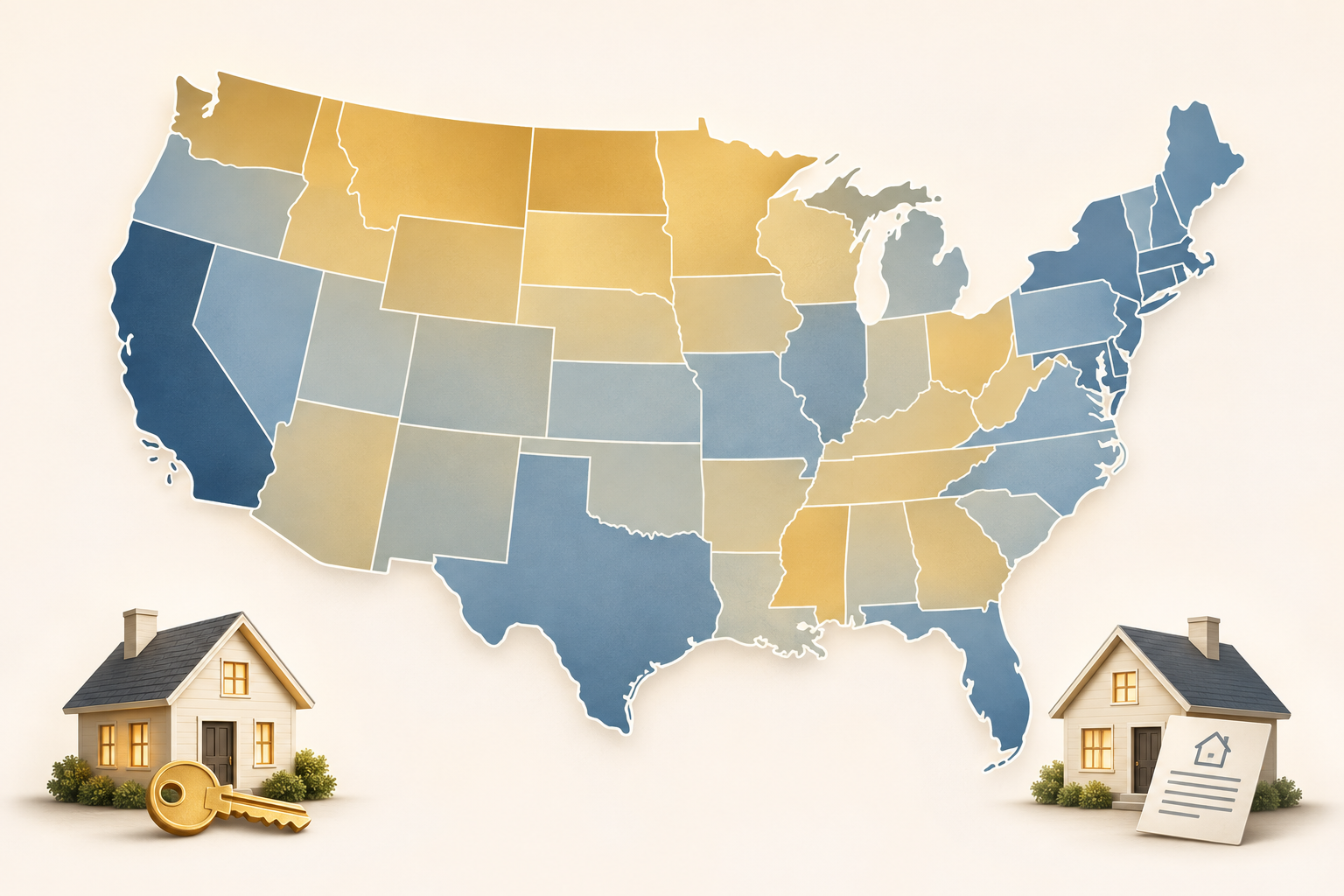
Roughly 41% of American homeowners own their homes outright. Meanwhile, 59% still carry a mortgage, according to recent ACS data analyzed by Realtor.com. This national picture helps explain how the mortgage-free homeowners share varies by state. It also shows how those differences shape local housing markets. For homebuyers, sellers, and investors, the numbers offer context for inventory, pricing, and timing.
The latest figures reveal a clear regional split. The West has the highest share of mortgaged homeowners. By contrast, the South has a relatively lower mortgage share. The Northeast and Midwest fall between those regions. West Virginia stands out nationally: 56.6% of homeowners there are mortgage-free, while 43.4% have a mortgage. Meanwhile, the Washington, DC area has a high mortgage share of 73.5%. Its high costs, fast-moving market, federal employment, and limited supply help explain this pattern.
The national snapshot and its implications
Across the nation, areas with a greater proportion of outright ownership tend to be less exposed to shifts in borrowing costs. That dynamic can influence how markets respond to rate changes and inventory movements. Meanwhile, mortgage heavy regions tend to be more rate sensitive, with monthly payments and moving costs rising as borrowing costs climb.
In cities and states with many homeowners carrying low rate loans, homeowners may delay selling to avoid higher monthly payments on new financing. Conversely, debt free owners can list on their own schedule, potentially freeing up inventory if they decide to move or downsize.
New Jersey relevance and practical takeaways
The broader national trend underscores why inventory conditions and price dynamics can be affected by how many residents hold mortgages. Homeowners with low rate loans may be reluctant to move, which can constrain supply. On the other hand, debt free homeowners, when they decide to list, could contribute to more transactional activity without rate risk considerations. For those navigating NJ markets, it can be helpful to assess both the mortgage status of nearby properties and the local affordability landscape before setting expectations for offers or timing.
If you’re exploring your options, start by reviewing your own mortgage status. Then consider how it may affect the cost of your next home. For more guidance, visit our resources on homebuying in New Jersey or explore our NJ real estate hub.

West Virginia’s example illustrates affordability and aging population dynamics that support mortgage-free ownership. In October 2026, the state’s median asking price was well below the national median, helping make outright ownership a more attainable goal for some buyers and long-time residents.
Contextual note on senior homeowners
Among households aged 75 and up, mortgage-free ownership remains common, though the share with a mortgage has risen slightly in recent years. This ongoing dynamic can influence when seniors decide to list and how they approach downsizing or care needs.
Source attribution: Realtor.com, 2025 ACS 1-year estimates and related analysis. Original reporting: Realtor.com, with data referenced from the U.S. Census Bureau ACS 1-year estimates.
Editorial note: For readers seeking NJ-specific guidance, see our general New Jersey real estate information page and the NJ homebuying resources listed above.
Source: Realtor.com article on mortgage-free homeowners by state, using 2025 ACS 1-year estimates. Original Realtor.com coverage.