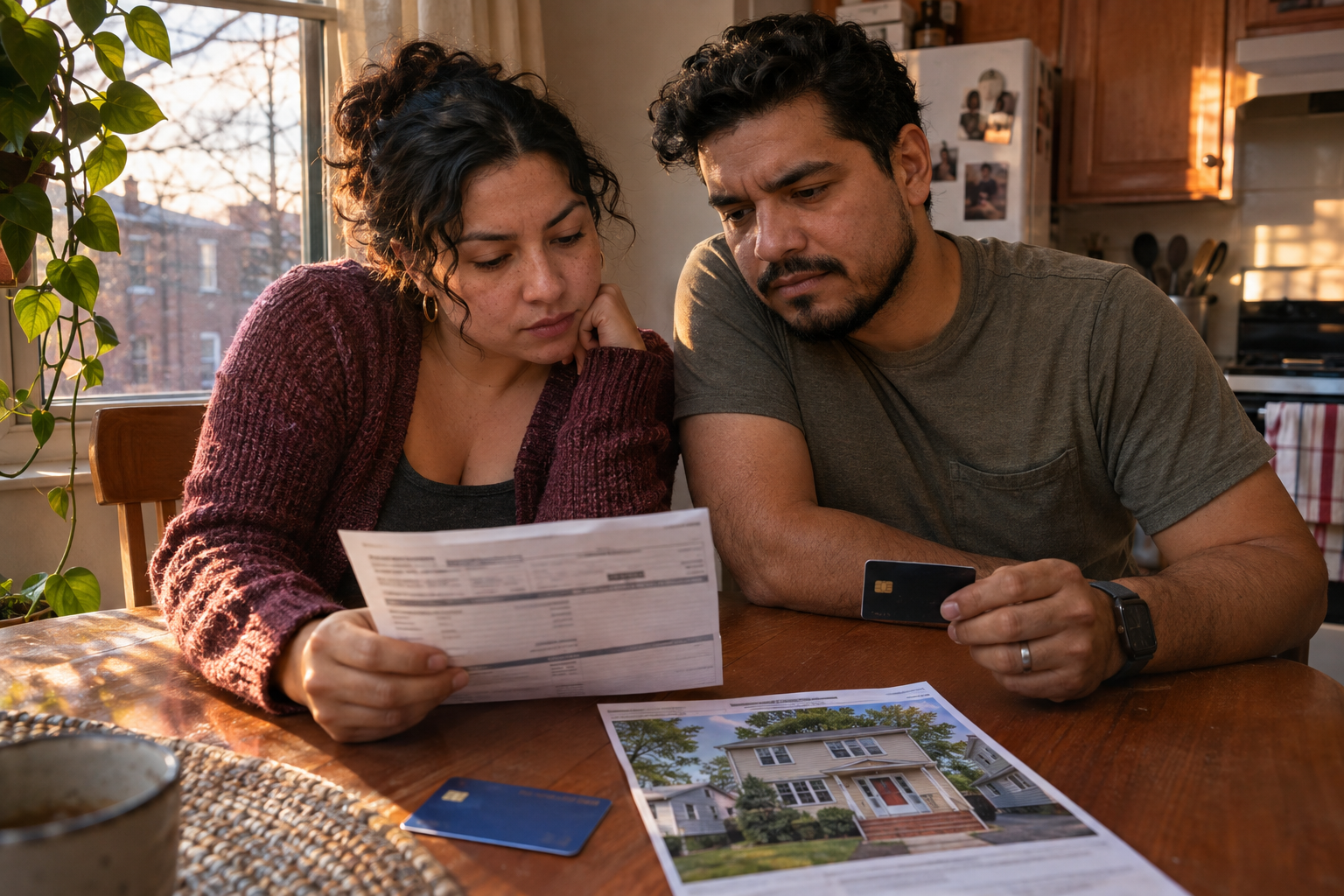

Your property tax bill could be $15,000 a year, and you could still have a weak case for an appeal. One of the most common mistakes homeowners make when considering a New Jersey property tax appeal is assuming that a high bill proves their property is overassessed.
A property tax appeal challenges the assessed value your municipality assigned to your property. A calculation under New Jersey’s Chapter 123 rules can leave that assessment in place even when the evidence supports a lower market value than the assessment initially seemed to imply. nj.gov
Before spending money on an appeal or filing paperwork, find out which valuation date applies, what evidence you need, and how to tell whether your assessment warrants a closer look.
What Are You Appealing in a New Jersey Property Tax Appeal?
Start by distinguishing five terms that homeowners often mix up.
| Term | What it means |
|---|---|
| Market value | The price an informed buyer and an informed seller would agree to in a typical sale. |
| Assessed value | The taxable value recorded by the municipality. |
| Average ratio | The municipality’s average ratio of assessed values to market values. |
| General tax rate | The multiplier applied to the assessment to calculate the property tax. |
| Tax bill | The amount the property owner owes in property taxes. |
Your appeal focuses on whether your assessment is supportable under the rules that apply to your property. The amount of your bill can prompt you to investigate. To build a case, you need evidence about the value of the property.
Why Property Taxes Get So Much Attention in New Jersey
New Jersey ranked first in the Tax Foundation’s state comparison using 2024 data, with an effective property tax rate of about 1.88% on owner-occupied homes. That figure summarizes taxes paid as a share of home value statewide.
Your individual bill depends in part on your property’s assessment and your municipality’s general tax rate. As a result, two homes with similar market values can have very different bills if they are in different towns. If your bill looks high, start by reviewing your own assessment.
Which Valuation Date Applies to Your Appeal?
For a regular assessment appeal, New Jersey generally uses October 1 of the year before the tax year under appeal. For example, if you appeal your 2027 assessment, you generally need evidence of what your home was worth on October 1, 2026. Assessment and Appeals
Choose comparable sales that help establish value around that date. The most recent sale may reflect different market conditions. A foreclosure sale, a sale between relatives, or a transaction with unusual terms may carry less weight as evidence. nj.gov
Also ask your municipal assessor for the property record card and check details such as:
- Square footage
- Number of bedrooms and bathrooms
- Garage and basement
- Property type and condition
- Major improvements or additions
If you find an error, consider how it affects market value. For example, an incorrect square-footage figure is worth investigating because it can affect which homes you use as comparable sales.
How the Chapter 123 Common Level Range Works
When Chapter 123 applies, New Jersey publishes an average ratio and a common-level range for the municipality. The range generally extends 15% below and 15% above the average ratio. To see where your property falls, divide its assessed value by its supported market value.
Example 1: The assessment stays within the range
Suppose your assessment is $400,000, the evidence supports a market value of $500,000, and the municipal average ratio is 75%.
$400,000 ÷ $500,000 = 80%
With a 75% average ratio, the common-level range runs from 63.75% to 86.25%. Your property’s ratio of 80% falls within that range, so the assessment would generally stay in place under Chapter 123.
Example 2: The assessment falls above the upper limit
Now suppose your assessment is $500,000, and the evidence also supports a market value of $500,000.
$500,000 ÷ $500,000 = 100%
That 100% ratio exceeds the 86.25% upper limit. In this simplified example, applying the municipal average ratio to the supported market value would give you a revised assessment of $375,000.
| Calculation | Result |
|---|---|
| $500,000 market value × 75% average ratio | $375,000 revised assessment |
| $500,000 original assessment − $375,000 revised assessment | $125,000 assessment reduction |
| $125,000 assessment reduction × hypothetical 3% tax rate | $3,750 estimated annual tax reduction |
The $3,750 figure illustrates the calculation. Actual results depend on factors including the evidence, the applicable tax rate, the tax year, and the decision in the case.
Check for a municipal revaluation. In the year a municipality implements an approved revaluation, Chapter 123 generally does not apply. In that situation, the assessment is evaluated against 100% of true market value.
New Jersey Property Tax Appeal Deadlines
Review your assessment notice as soon as you receive it. The general filing dates for county tax board appeals depend on the county and whether the municipality implemented a revaluation or reassessment. Assessment and Appeals
| General deadline | When it applies |
|---|---|
| April 1 | Regular filing deadline in most counties. |
| May 1 | Generally applies when a municipality implements a municipality-wide revaluation or reassessment. Confirm the date with your county tax board. |
| January 15 | General deadline under the alternate assessment calendar used in Burlington, Gloucester, and Monmouth counties. |
For regular April 1 appeals and the January 15 alternate-calendar appeals, the filing deadline can be 45 days after the municipality completes its bulk mailing of assessment notices if that date is later. The county tax board must receive your appeal by the applicable deadline. A postmark alone is insufficient. nj.gov
Check your assessment notice and confirm the deadline and filing method directly with your county tax board. By the time your summer tax bill arrives, the regular appeal deadline may already have passed. New Jersey Division of Taxation assessment and appeal information
What Evidence Can Strengthen a Property Tax Appeal?
Start with sales that help establish what your property was worth on the applicable valuation date. A neighbor’s lower bill or assessment may raise a question, but it does little on its own to establish your home’s market value. nj.gov
When evaluating comparable sales, look at:
- Location and property type
- Size, age, and condition
- Number of units
- Garage and basement
- Significant features and improvements
Choose sales you can explain. A nearby house that sold for less may have been smaller or in worse condition. An online estimate can help you decide whether to investigate, and a comparative market analysis can help organize the sales data. If your case calls for a formal appraisal, consult an appraiser. If you’re also considering selling, learn how I help New Jersey homeowners prepare to sell and evaluate comparable sales.
How to Check Your Assessment Before Filing an Appeal
Before filing a New Jersey property tax appeal, use this checklist to review your assessment, gather comparable sales, and confirm your deadline.
- Confirm your property’s assessed value.
- Review the property record card for factual errors.
- Identify the valuation date for the tax year you plan to appeal.
- Estimate a reasonable market value range using comparable sales.
- Confirm whether the municipality implemented a revaluation or reassessment for that year.
- Look up the official average ratio and common-level range if Chapter 123 applies.
- Divide your assessment by your estimated market value.
- Compare the result with the municipality’s upper limit.
- Confirm the filing deadline and submission method with your county tax board.
If your ratio exceeds the upper limit, the assessment may warrant a closer review. If it falls within the range, Chapter 123 may leave the assessment in place even if your market value estimate is reasonable. Use the state’s published figures for the tax year under appeal.
Keep Paying Your Taxes While the Appeal Is Pending
Filing an appeal does not suspend your tax payment obligations. If the property is held by an LLC, corporation, or trust, or if the appeal involves a commercial or income-producing property, a formal appraisal, or a Tax Court filing, consult the appropriate tax attorney, appraiser, or other qualified professional. nj.gov
This article provides general educational information and does not replace legal or tax advice for your specific situation.
Is a New Jersey Property Tax Appeal Worth Pursuing?
Can I show, with evidence, that my assessment is too high under the rules that apply in my municipality?
A high tax bill can give you a reason to take a closer look. Your case depends on the correct valuation date, credible comparable sales, the applicable assessment rules, and a petition filed on time.
If you own property in New Jersey and want an initial look at your assessment, I can help you review your property information and comparable sales and identify when it makes sense to consult an appraiser, tax professional, or attorney. Contact Alexis Guilliani